Cenotes near Chichen Itza are one of the easiest ways to turn a hot afternoon of ruins-walking into a genuinely good day, and there are more of them within reach than most visitors realize. I would not treat a cenote stop as an afterthought: the swim is often the part of the day people remember most, once the pyramid photos start to blur together. Five cenotes come up again and again in planning this trip: Ik Kil and Suytun sit closest to the archaeological zone itself, while Samula, X’Keken and Zaci cluster around Valladolid, a little further out but easy to combine with a town stop. If you are deciding how to get yourself to any of them, see which Chichen Itza tours already include a cenote swim before you start piecing together your own route.
Which cenotes are actually near Chichen Itza?
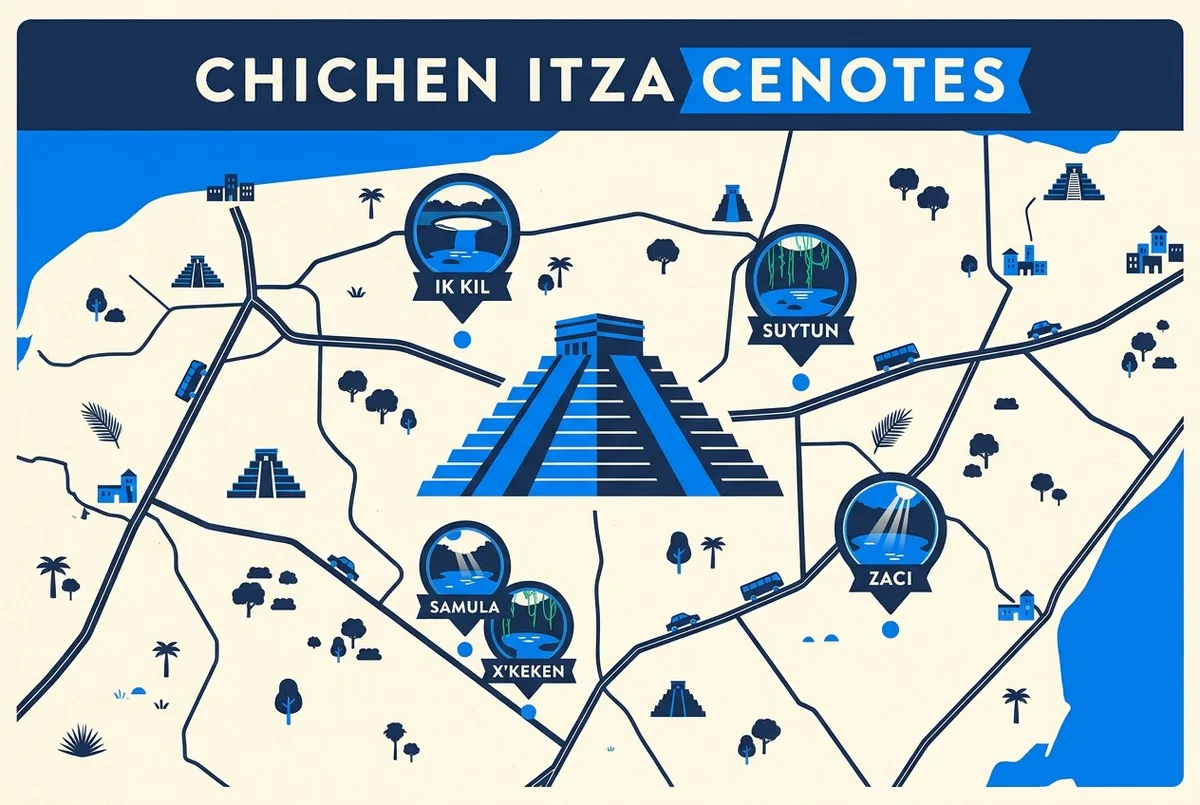
Five come up most often in trip planning: Ik Kil, Suytun, Samula, X’Keken and Zaci. Ik Kil sits closest to the ruins themselves, just a few kilometers away, while the rest cluster around Valladolid, roughly 40 minutes further on. I would pick based on how much extra driving you are willing to do, not just fame, since the most photographed cenote is not always the closest one.
How do these cenotes compare on distance, depth and crowds?
| Cenote | Distance from Chichen Itza | Depth | Crowd level |
|---|
| Ik Kil | About 3 km (5 minutes) | Roughly 40 meters, water about 26 meters down | Very high, especially midday |
| Suytun | About 45 km (45 minutes) | Shallow near the platform, deeper toward the edges | High, mainly for the light-beam photo spot |
| Samula (Saamal) | About 45 km (45 minutes) | Moderate, cave-roofed with hanging roots | Moderate |
| X’Keken | About 45 km (45 minutes, next to Samula) | Moderate, semi-enclosed cave | Moderate |
| Zaci | About 42 km, inside Valladolid town | Shallow to moderate | Lower, mostly locals and passersby |
I would read this table as a starting point, not a final answer, since crowd levels shift hard by time of day and season. Early morning at any of these beats mid-afternoon almost every time.
Is Ik Kil the best cenote to visit from Chichen Itza?
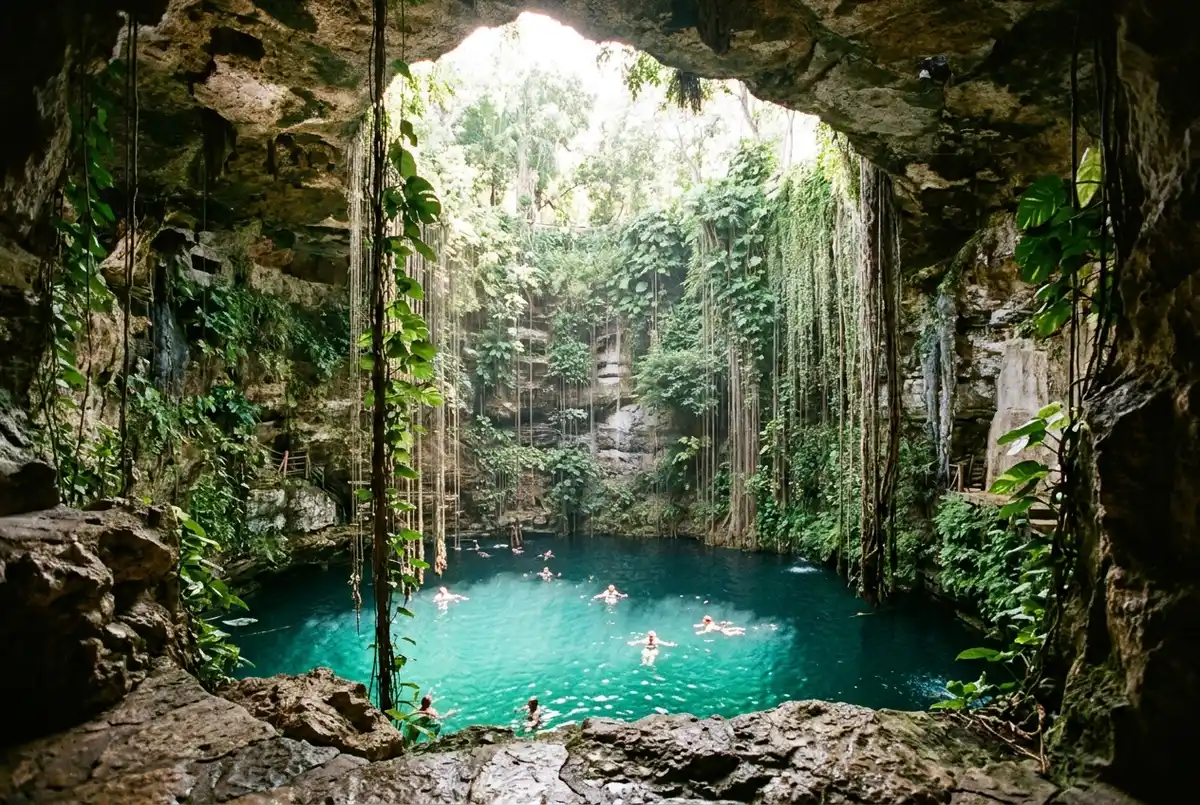
Yes, if proximity and the classic open-air photo matter most to you. Ik Kil is an open-roof sinkhole with a diving platform and vines trailing down from the rim, and it sits only a few minutes from the archaeological site, which is why it shows up on so many day-tour itineraries. The trade-off is crowds, since its closeness to Chichen Itza means tour buses stack up here through the middle of the day. My full breakdown of Ik Kil cenote covers the entry fee, the platform and whether it is worth visiting on its own.
What makes Suytun different from the other cenotes here?
Suytun is the one built around a single photo: a narrow beam of sunlight that falls through a small opening onto a stone platform in the middle of the water, usually strongest around midday. I would go in expecting a short, somewhat staged visit rather than a long swim, since the platform area gets busy fast and most visitors are there for the same five-minute window of light. If a long, relaxed float matters more to you than the photo, I would pick Samula or X’Keken instead.
What about Samula and X’Keken near Valladolid?
These two sit right next to each other and make an easy pair if you are already heading toward Valladolid. Samula, also written Saamal, has a cave roof with long tree roots hanging down into the water and a shaft of light cutting through a hole above, which gives it a quieter, more dramatic feel than Ik Kil’s open sky. X’Keken is similar in style, slightly more enclosed, and usually calmer. I would choose this pair over Ik Kil if you want something that feels less like a tour-bus stop and more like a cave swim. My dedicated page on Cenote Samula goes deeper on what makes it different.
Is Zaci worth visiting if I am already staying in Valladolid?
Zaci is the cenote inside Valladolid’s own town limits, which makes it the easiest to reach if you are already based there and do not want to arrange extra transport. It is less dramatic than Ik Kil or Samula, more of a local swimming hole than a postcard shot, but I would still recommend it for anyone staying in town who wants a swim without a drive. I cover Zaci along with Suytun and X’Keken on my roundup of the other Valladolid-area cenotes.
Do Chichen Itza tours actually include a cenote swim?
Most full-day tours from Cancun, Playa del Carmen and Tulum build in a cenote stop, though it is worth knowing which one. The tours sold on this site, including the Chichen Itza, Cenote & Valladolid Tour, stop at Cenote Chichikan near Valladolid rather than Ik Kil or Suytun specifically, and the Merida departure swims at a cenote called Noolha near Izamal. I would not assume a bundled tour visits the famous one you have seen in photos; if a specific cenote is non-negotiable for you, check the exact stop listed on the tour before booking, or plan a separate, independent visit to that one.
How deep and cold is the water, realistically?
Most of these cenotes run from a few meters to around 25 to 40 meters deep depending on the specific sinkhole, and the water stays noticeably cooler than the Caribbean coast, since it is shaded groundwater rather than sun-warmed sea. I would expect a genuinely refreshing, slightly cold shock on entry rather than anything unpleasant, and that temperature drop is honestly half the appeal after a sweaty morning at the ruins.
What should I bring for a cenote swim?
Pack a swimsuit under your clothes, a quick-dry towel, and biodegradable sunscreen if you plan to swim, since some cenotes restrict regular sunscreen to protect the water. A life vest is mandatory at most sites for anyone not confidently swimming and is rarely included free in a tour price, so budget a small rental fee. I would also bring cash in small bills, since entry fees and gear rentals at independent cenotes are usually paid on site rather than by card.
Can I visit more than one cenote in a single Chichen Itza day?
Technically yes, but I would not plan on it unless your day is built specifically around cenotes rather than the ruins. Most tours and independent itineraries only have time for one stop once you factor in the drive to and from Chichen Itza itself, so trying to fit in two usually means rushing both. If multiple cenotes genuinely matter to you, I would dedicate a separate day to the Valladolid cluster rather than squeezing them into your ruins day.
How much does entry to each cenote actually cost?
Independent cenotes like Ik Kil, Samula, X’Keken, Suytun and Zaci each charge their own entrance fee on site, separate from anything you pay for Chichen Itza itself or for a bundled tour. Ik Kil tends to sit at the higher end of that range given its facilities and fame, while Zaci, being a more basic local spot inside Valladolid, usually costs less. I would bring cash for all of them, since smaller independent cenotes are less consistent about card payments than the ruins ticket office is, and I would treat a life vest and locker rental as a small additional cost layered on top of the base entry price at every one of these.
What time of year is best for visiting these cenotes?
The dry season, roughly November through April, brings clearer water and easier driving conditions, which matters since several of these cenotes are reached by secondary roads. I would still visit happily in the rainier months, June through October, since the water itself does not change much and a short afternoon shower rarely lasts long enough to ruin the day. What does shift more with season is crowd size: winter holiday weeks and spring break push every cenote on this list busier than a quiet September weekday would be.
Are these cenotes safe for kids or non-confident swimmers?
Most of them are manageable for families, with shallower edges available at Zaci and X’Keken in particular, though I would treat every cenote on this list as requiring supervision and a life vest for anyone not a strong swimmer. Ik Kil’s depth and open platform make it less forgiving for small children without close supervision, while the calmer, more contained feel of Samula and X’Keken tends to suit nervous swimmers better. I would ask about life vest sizing for kids specifically when you arrive, since rental stock varies by location and by how busy the day already is.
How do crowd levels really compare once you are standing there, not just on paper?
Ik Kil’s crowding is the most consistent complaint I hear, since its closeness to Chichen Itza means it absorbs overflow from nearly every tour bus heading that direction. Suytun’s crowding is concentrated specifically around the light-beam platform rather than spread through the whole space, so the rest of the cenote can feel calmer even on a busy day. Samula, X’Keken and Zaci generally stay more manageable throughout the day, partly because they see less bus traffic and partly because their smaller size naturally caps how many people fit comfortably at once.
Why does the Yucatan have so many cenotes in the first place?
The entire peninsula sits on porous limestone with almost no surface rivers, so rainwater filters straight down and dissolves the rock over thousands of years, eventually collapsing roofs to form these sinkholes. The ancient Maya treated many of them as sacred access points to the underworld rather than ordinary water sources, which is part of why Chichen Itza’s own Sacred Cenote inside the archaeological zone held ceremonial rather than swimming significance. I would keep that history in mind while you swim at any of these, since the open-air, swimmable cenotes near the ruins are a genuinely different category from the ceremonial one preserved inside the site itself.
How does a cenote stop fit into a bigger Valladolid day?
If you are basing a day around Samula, X’Keken, Suytun or Zaci rather than just passing through, Valladolid itself is worth building time around, not just the cenotes on its outskirts. The town’s colonial center, its own convent and a reasonable choice of restaurants make it easy to turn a cenote morning into a full day without rushing back toward the coast. I would treat the swim as one part of a Valladolid visit rather than the entire point of going, especially if you have already seen Chichen Itza earlier that day and want a slower afternoon.
Do I need to rent gear at every cenote, or can I bring my own?
You can bring your own mask, snorkel or swim gear to most of these cenotes, and I would do that if you already own decent equipment, since rental quality at smaller, independently run sites varies more than you would expect. A life vest is the one item that is usually mandatory rather than optional for anyone not a confident swimmer, and bringing your own, if you happen to be traveling with one, saves a small rental fee at every stop on this list.
Which cenote should I pick if I can only choose one?
If proximity and the classic look matter most, I would pick Ik Kil, accepting that you will share it with a lot of other visitors. If a quieter, more atmospheric swim matters more than being close to the ruins, I would drive the extra half hour to Samula or X’Keken instead. For photos specifically, Suytun’s light beam is unmatched, but I would go early and keep expectations realistic about the crowd around that one platform.
Beyond the swim itself, Chichen Itza’s own region rewards a bit more exploring. My guide to getting to Chichen Itza breaks down travel time from every major base, and if you want to round out a Valladolid-area day beyond just the water, what else to see near Chichen Itza covers the towns worth building a stop around.
Does the cenote you pick affect how you plan the rest of your Chichen Itza day?
Yes, more than most people expect going in. A cenote close to the ruins, like Ik Kil, lets you fold the swim into the same half day without much extra driving, while the Valladolid cluster, Samula, X’Keken, Suytun and Zaci, works better as either a separate afternoon or part of a longer day that already includes a Valladolid stop. I would decide this early, since it genuinely shapes whether your day feels relaxed or rushed by the time you are back at your hotel.
My take on choosing a cenote
If I were planning this myself, I would pick the cenote based on how my day is already shaped rather than chasing the single most photogenic option. Already booked on a tour that stops at Chichikan or Noolha? I would just enjoy that swim rather than scrambling to also see Ik Kil. Building your own itinerary from scratch? I would lean toward Samula or X’Keken over Ik Kil, since the quieter cave setting tends to beat the crowd at the famous one once you have actually stood in both.
FAQ: Cenotes near Chichen Itza
What is the closest cenote to Chichen Itza?
Ik Kil is the closest well-known cenote, about 3 kilometers from the archaeological site, roughly a five-minute drive.
Do I need to book a cenote visit in advance?
Independent cenotes like Ik Kil generally accept walk-ins and charge an entry fee on site, while a cenote bundled into a guided tour is already covered by your tour booking.
Is Ik Kil or Samula better for swimming?
Ik Kil offers an open-air, dramatic setting with more space, while Samula gives a quieter, cave-like swim with less crowding. Neither is objectively better, it depends on what kind of experience you want.
Which Chichen Itza tours include a cenote stop?
The guided day tours from Cancun, Playa del Carmen, Tulum and Merida on this site all include a cenote swim, though the specific cenote (Chichikan or Noolha) is usually not Ik Kil or Suytun.
More on the Yucatan’s cenote system in general is on Wikipedia, which is worth a skim if you want to understand why this region has so many of them in the first place. My bottom line: decide how much extra driving you are willing to do, then pick the cenote that matches, rather than assuming every option is equally close or equally crowded.
chichen itza tours →